
Industrial Quick-Freezing and Ultra-Low Temperature Storage
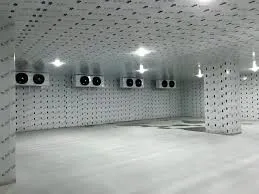
In modern cold chain logistics and industrial manufacturing, industrial quick-freezing rooms and ultra-low temperature cold storage are two key deep-freeze facilities. Many beginners or companies easily confuse the two, but in reality, they have essential
Industrial Quick-Freezing and Ultra-Low Temperature Storage
Main features
The main goal of an industrial blast freezer is to get items frozen as quickly as possible through the “-1℃ to -5℃ maximum ice crystal formation zone.”
• Technical principle: If freezing is too slow, water forms large ice crystals that puncture cell walls, causing nutrient loss and texture deterioration when thawed. Blast freezers use very low temperature differences and high airspeed to form tiny micron-sized ice crystals, perfectly locking in the cell structure.
• Common types:
• Spiral/Tunnel Freezers (continuous type): Suitable for modern production lines, where food or materials move in and out on a conveyor belt, completing freezing in a few minutes to over ten minutes.
• Batch Blast Freezers: Carts are pushed into the freezer, and strong high-power fans circulate cold air to lower the core temperature to below -18℃ within 2 to 8 hours.
• Liquid Nitrogen Freezing (ultra-low temperature): Uses -196℃ liquid nitrogen spray for super-fast freshness locking, often used for high-end pre-made dishes and premium seafood.
• Suitable scenarios: Dumplings and other pastries, meat freezing after slaughter, pre-made food processing, as well as intermediate pharmaceutical compounds and special chemical materials before crystallization.
| Main Purpose | ||
| Typical Temperature Range | -35℃ to -40℃ (standard air cooling) -60℃ to -196℃ (ultra-low/deep freeze/liquid nitrogen) | -30℃ to -60℃ (high-value seafood) -60℃ to -86℃ (medical biological/industrial materials) |
| Holding Time | Very short (usually a few minutes to a few hours, shipped once fully frozen). | Very long (months or even years). |
| Cooling Design | Focus on high cooling capacity and high air speed to remove heat efficiently. | Focus on high insulation, low fluctuations, stable operation, and moderate air speed. |
• Applicable Scenarios: • High-end Food: Long-term storage of tuna, salmon, and premium aquatic products (requires -60℃).
• Medical and Scientific Research: Preservation of vaccines, plasma, stem cells, and biological samples.
• Industrial Manufacturing: Ultra-low temperature environmental testing of electronic components, cold resistance testing of aerospace materials, and cold-fit assembly of precision machinery.
Ultra-low temperature storage is usually considered the “next step” after quick-freezing, specifically used to store already frozen, temperature-sensitive special materials.
• Technical principle: At the typical -18℃ environment, some high-fat fish fats still slowly oxidize, and proteins undergo subtle degradation. When the temperature drops below -50℃ to -60℃, enzyme activity is completely suppressed, fat stops oxidizing, which greatly extends shelf life.
• Equipment requirements:
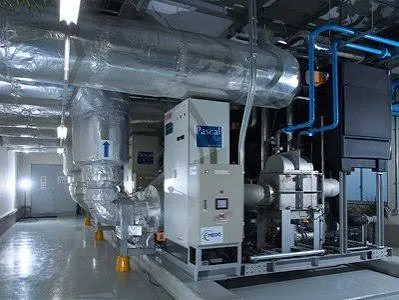
• Refrigeration system: Single-stage compressors have a hard time reaching below -40℃, so ultra-low temperature storage must use a two-stage compressor or a binary/ternary cascade refrigeration system (i.e., using a low boiling point refrigerant and a conventional refrigerant system working together in series).
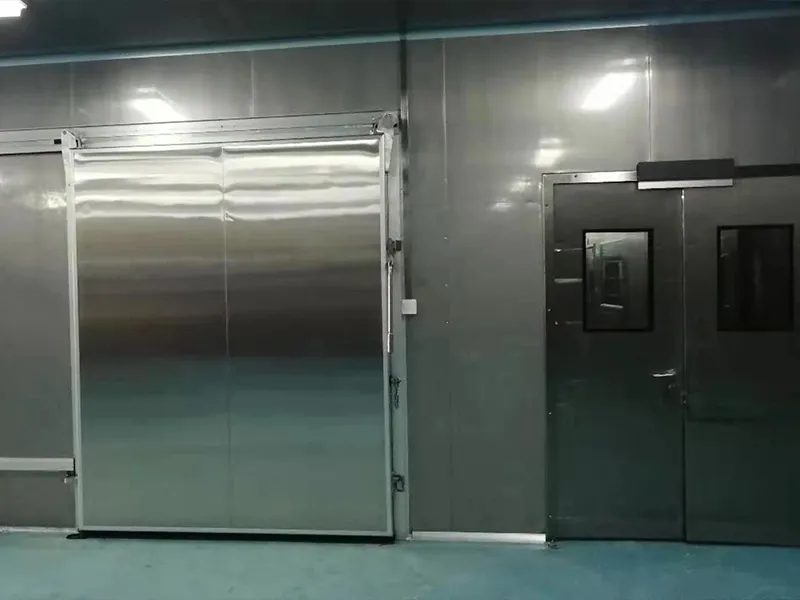
• Insulation system: The thickness of the storage insulation panels is usually above 150mm~200mm, mostly using high-density polyurethane (PU) or polyisocyanurate (PIR), and the joints must have special anti-cold-bridge treatment to prevent frosting on the exterior or large amounts of cold leakage.
Do you need a bulk purchasing solution or custom-made special sizes?
We offer free sheet metal layout drawings, cooling load calculations, and customized tiered pricing for your project. Providing a solution in just 20 minutes.